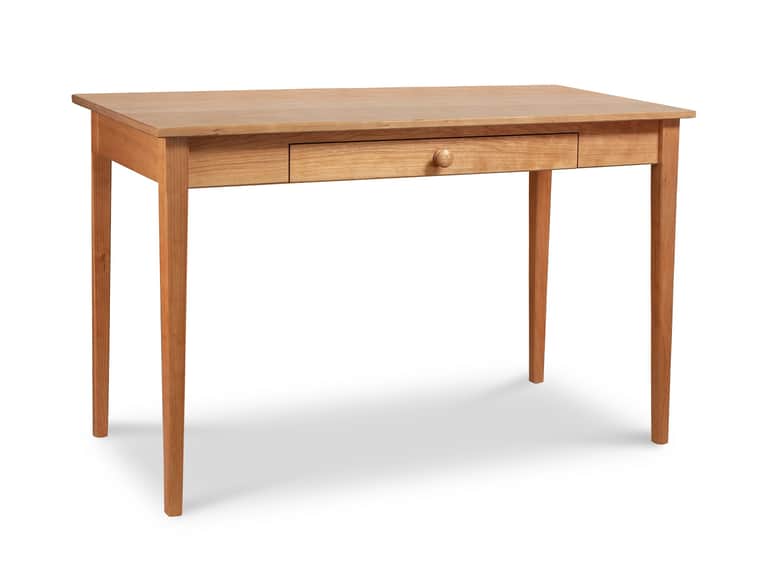
Desks and office furniture serve as foundational workspaces that influence organization, productivity, and comfort. In this category, materials and design choices emphasize durability, ergonomic support, and aesthetic harmony with home or studio environments. Understanding how a desk integrates with lighting, seating, and storage helps users create a focused, efficient workspace for writing, drafting, and computer tasks.
Wooden writing desks, such as the Vermont Shaker Writing Desk, highlight classic proportions, clean lines, and sturdy joinery. Features typically include a compact footprint, simplicity in hardware, and smooth-surface finishes that reduce glare on screens. Functional benefits center on reliable document handling, accessible storage, and a timeless design that complements traditional or contemporary interiors.
The Ryegate Writing Desk represents an example of thoughtfully scaled workspace furniture, balancing form and function. Engineers often prioritize cable management, drawer depth, and keyboard tray compatibility to support organized workflows. By offering uncluttered surfaces and well-spaced storage, these desks facilitate focused writing, note-taking, and computer-based tasks.
When evaluating desks for office or study use, considerations extend to dimensions, surface materials, and under-desk clearance. Surface finishes impact durability and ease of cleaning, while leg design influences stability on varied floor types. A well-chosen desk aligns with posture-friendly seating and appropriate monitor or laptop placement to promote long-term comfort.
In addition to desks, the category touches on related textiles and comfort features such as bedding and toppers, which contribute to overall well-being in work-from-home settings. Keywords like bedding, comforters, wool comforters, toppers, and wool mattress toppers reflect broader materials knowledge relevant to a Vermont-based, fiber-focused approach to home interiors and productivity.
 Furniture